
Category Archives: Guest Author

The Marketing Spend RFP – Everyone is debating over the death of it — I think it needs to be improved Part II


Today’s guest post is from Mat Langley, a Strategic Advisor and Procurement Executive with 14 years experience in leadership roles in strategic sourcing and category management in Europe, Africa and Asia across Finance, IT Outsourcing and Oil & Gas industries who is currently associated with Shortlist.co.

In this post I am suggesting three areas the tools we’re implementing need to change to give Marketing what they need and then I’d love to hear any more ideas/suggestions that you have.

The ideas below are based upon the fact that a significant percentage of marketers (greater than 50% according to a July study by Walker Sands2) believe that we’re not investing enough in the right amount or the right type of solutions for them.
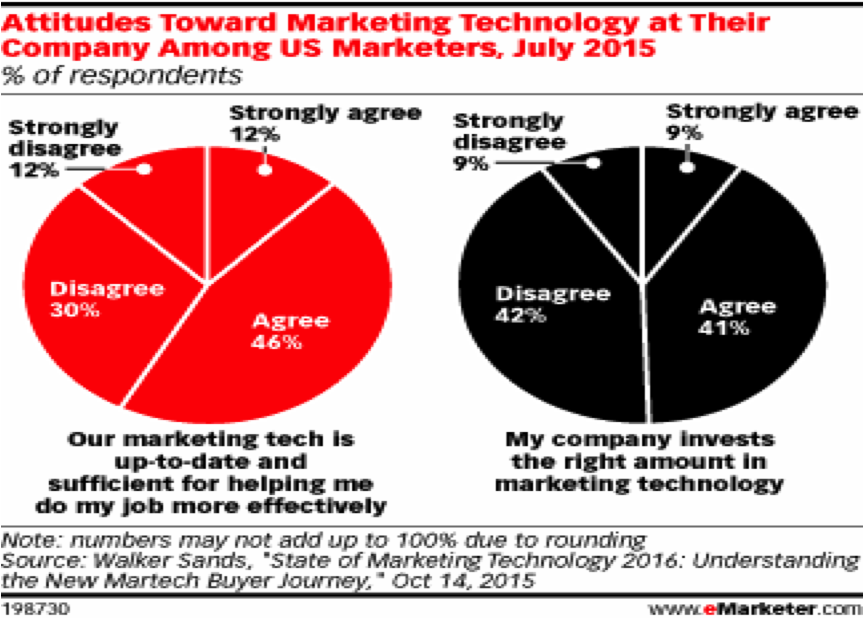

eMarketer.com Marketing Attitudes
1. The tools we’re providing need to improve usability – day 1

A recent international survey of Procurement Executives by Ivalua shows that we are focused on transforming the toolsets we’re using today — 80% of us consider Digital Transformation an opportunity3. That’s fantastic – now our focus needs to continue finding tools that are simple for marketers to use — on day 1 — not year 1. Preferably they should have modern interfaces and be SaaS so Marketers don’t have to use one brain at home and another at work.

2. The tools we’re providing need to improve access to qualified agencies

With the significant increase in channels and the number of content components that need to be created – access to a broader set of qualified specialist agencies to meet campaign needs is required. We need to provide tools that let marketers find, engage and then partner with agencies big and small across the specialist spectrum regardless of whether they are across the street or across the globe. And no, I’m not recommending that long-term relationships or that strategic and broad partnerships aren’t important — I’m simply pointing out that Marketing needs an agile toolset to deliver against compelling (and evolving) challenges — and they need access to partners ‘on demand’. This needs to be done in a way that meets our obligations to protect the organization commercially while bringing in the best and brightest vendors.

3. The tools we’re providing need to improve the creation of Request for Partnerships (RFPs) – perhaps they could even be user friendly?

Everyone in the organization has too much work… We need to provide tools that allow Marketers to find and share best practice workflows, templates for briefs, easy access to current best practice questions and that have the maximum amount of automation built-in for comparisons, approval workflows, agreement signatures, and so on. And our tools need to integrate with other tools marketers are using to get the job done – whether that’s Dropbox for file storage, Slack for communication, Office365 for email and yes, even your ERP system! And most of all the tools we choose need to help engage agencies and build long-term partnerships – not drive them all into a single box as described by Kirk Cheyfitz in his piece on ‘6 New Reasons to Kill the RFP4:

I think the fact that you put your RFP out only to agencies you really like is a demonstration that it wasn’t too closely allied to the mass, mindless cattle calls that I rail against. Then you actually seem to ask open-ended questions that invite the respondents to define or re-define the conversation. And that puts you completely outside classic RFP territory. Even I would respond to an RFP like that.

I believe that with a renewed or for many an on-going focus on the above 3 items we can align with Marketing and let them take control of their Request for Partnerships which will, hopefully with the right tools, lead to RFPs being done in days and weeks – not months and with less frustration and pain for all stakeholders involved: Marketing, Procurement and Agencies. This should lead to more of the Marketing spend being influenceable and competitive, thereby addressing both obligations of procurement to the marketing team and the broader organization.

Thanks, Mat.

2 Walker Sands State of Marketing Technology 2016 Understanding The New Martech Buyer Journey
3 Ivalua. (2015, 3 November). “International Survey Procurement Executives”, PROCUREMENT IN THE DIGITAL AGE: Measuring the impact of Digital on Procurement Departments.
4 Kirk Cheyfitz. (2015, April 02). 6 New Reasons to Kill the RFP: Find Innovators, Not Commodities.

The Marketing Spend RFP – Everyone is debating over the death of it — I think it needs to be improved Part I


Today’s guest post is from Mat Langley, a Strategic Advisor and Procurement Executive with 14 years experience in leadership roles in strategic sourcing and category management in Europe, Africa and Asia across Finance, IT Outsourcing and Oil & Gas industries who is currently associated with Shortlist.co.

I want to start with a bold statement — in Procurement, the most challenging group to work with is most often Marketing. Almost every other function in the organization easily identifies the value we aim to deliver. When it comes to who’s really leading, the RFP there shouldn’t be a ‘hot potato scenario’ — we guide, as Procurement experts, and collaborate in a mutual partnership. Marketing, by comparison is still evolving their views on how to collaborate with Procurement. In a late 2014 study conducted by the ANA (Association of National Advertisers), nearly half of all Marketing and Procurement respondents stated that the relationship between them needed to be more collaborative. Nearly 50% of Marketing and Procurement professionals admit that they aren’t collaborating the way they need to in order to deliver maximum value to their brands.

Now, on the flip side, my experience with Marketing colleagues is that they are passionate, energetic and constantly focused on being creative. For Procurement (or Marketing) people reading — I’m guessing you’ve had more than a few debates and I’m sure that debate often centers on how Marketing feels like they’re wearing an RFP straightjacket designed, fitting and sewn by Procurement!

With agencies currently rebelling against RFP’s and even some very high profile CMOs like Linda Boff from GE calling for the ‘death of RFPs’1 — organizations can quickly get themselves in a downward spiral, ‘hot potato scenario’. It’s a relatively simple problem at its root: when Marketers don’t fully collaborate and provide the necessary support at the beginning of the RFP process, someone has to jump in and grab the ball (find the agencies, write the brief and RFP questions, and run the process) — that often ends up being Procurement — which doesn’t always lead to the best results for anyone involved: Marketing, Procurement, Agencies … everyone.

Hot Potato Was Fun as Kids — Not Today

To be clear, no one is at fault here. Marketing hates RFPs because they feel they are old and outdated; in stepping in to assist Marketing with their agency selection, Procurement ends up writing more of the RFP than they should, often using out of date questions; then it gets sent to more Agencies (just in case) because Marketing doesn’t have a short list or have time to find a strong and competitive agency panel; and finally, Agencies are overloaded responding to bloated RFPs and remember above – they’re also hoping that RFPs die. In the end, we’ve all played our part in proving exactly why RFPs are so terrible and ‘out of date’ – and the easy answer is just to kill them — and the tremendous value they can provide to everyone involved.

Now is not the time to kill the RFP (nor is that what we are suggesting) — it’s time to enhance our focus on improving communication, collaboration and building great internal and external partnerships. The marketing industry is changing so rapidly, with new channels and divisions, new technology, broader yet flatter reach requiring even more agility and calls for more focus on driving value out of every dollar spent. It’s an exciting time but also daunting and we need to ask ourselves, if the CMO is struggling to keep pace with this change, how are we going to support and bring value?

Time for more focus on what’s working and less ‘tossing blame around’ — Time to give Marketing the tools they want

Ok, I know that there is no perfect world where Marketing loves Procurement, Agencies love Procurement and Procurement loves procurement workloads… But there are things we’re doing really successfully that we can build upon. In Part II, I’ll suggest three areas the tools we’re implementing need to change to give Marketing what they need.

Thanks, Mat.

1 Marketers: It’s Time to Say RIP to the Media RFP

8 Reasons Best-in-Class Suppliers are Ignoring Your RFP


Today’s guest post is from Brian Seipel, a marking project expert at Source One focussed on helping corporations achieve both marketing and procurement objectives in their strategic sourcing projects.

Imagine you’ve spent hours crafting an RFP defining exactly what you need and finding the right mix of suppliers best able to provide a solution. Despite your efforts, top suppliers are either unresponsive out of the gate or go dark early in the initiative. Suddenly, your supplier pool is shrinking, and key players in the market have thrown in the towel before your RFP even got off the ground. Why is this, and what can we do to ensure sourcing events bring in the best possible candidates?

Failure to Launch

It’s easy to look at an RFP as a way for suppliers to “wow” you, but keep in mind that an RFP is a two way street — You need to “wow” them as well. Your RFP is your first shot at communicating your needs to potential suppliers. As such, the goal of your RFP should always be to attract the best possible suppliers and quickly establish why they should participate.

As soon as your RFP lands on their doorstep, you can bet suppliers are vetting you just as hard as you vetted them. They have a short list of red flags to determine whether they are a go or no-go — if your RFP trips too many, you can bet these suppliers will go dark, even if they are a perfect match. Knowing what these red flags are will help you craft an RFP that draws them in and ensures participation.

Before Distributing the RFP

Prior to reviewing the RFP itself, let’s discuss your potential supplier pool. Two red flags will ground your RFP immediately if not addressed before would-be participants see it.

  • Lack of proper fit.
    How sure are you that the suppliers receiving your RFP really are a good fit for all your requirements? Discovering supplier fit all but a few critical needs late in the game will be a huge time waster, so consider arranging a quick conference call with any suppliers you haven’t worked with before as a measure-twice-cut-once vetting process. Not only will you identify partial or all out bad fits, you’ll be able to establish a level of rapport early on.
  • Lack of a relationship.
    Speaking of rapport, participants know they are likely to run up against incumbent suppliers during the initiative. If you don’t begin building a relationship with them quickly, they may feel they are only being brought in to help you build a case to beat the incumbent down on price. A little glad-handing goes a long way: while you’re reaching out to participants to ensure they are truly a good fit, spend time describing why they were included in the RFP, and get them excited about the opportunity.

Hidden Landmines Within Your RFP

Now that suppliers are fully vetted and raring to go, take a step back and consider what red flags are sitting in your RFP documents.

  • Too much boilerplate language.
    Any supplier who has been in business for even a short time can spot boilerplate language — it isn’t hard to pick out. Boilerplate language creates the appearance of slapdash work, and suppliers won’t want to spend resources crating a thought out into a response when they don’t think as much thought went into developing it in the first place. Unless the boilerplate is needed to fulfill certain legal needs, strip it away.
  • Lack of clarity.
    New suppliers don’t know you, your needs, or what it will take to win your business — and they will bolt if they don’t get this information quickly. Your RFP should be clearly written and organized in such a way to fill in all three of these blanks in short order. At a minimum, include an elevator pitch about your organization, and follow with the reasons behind this RFP and what you hope to accomplish before leading into the scope of work. Lay out the initiative’s key milestone dates, and the deliverables required for each.
  • Poorly defined scope of work.
    It is all too easy to gloss over fine details when building out a scope of work. Stakeholders who are intimately familiar with the initiative from the inside may not consider an outsider’s (very limited) point of view when constructing this section. Nothing sends suppliers running faster than a weak scope, which gives the impression of a poorly defined project requiring too much of a time investment in gathering enough information to participate.
  • No opportunities for communication.
    Even the clearest RFP and most detailed scope of work only tells half the story. Open communication is needed to flesh out requirements and delve deep into the underpinnings of a winning proposal. Are you building time for Q&A sessions into your initiative, and clearly spelling out your availability to participants? If suppliers get the sense that they can’t engage you, they won’t risk spending time drafting a proposal only to learn later on that they missed the mark entirely.
  • Needlessly extensive questionnaire or requirements.
    The longer your questionnaire, the more time and resources suppliers will have to spend responding. Include too many, and you may make responding too difficult. Is each question strictly required to determine if a supplier can meet your needs? Cut out any superfluous questions with extreme prejudice.
  • Requests for financial information.
    The first requirement on the chopping block should be the need for one, two, or even three years of financial information if you don’t actually intend on examining them. Private companies often balk at this requirement, and RFP issuers often subsequently drop it after they decide they don’t truly need them. There are other ways to ensure financial stability, such as Dun & Bradstreet checks and reference checks. So ask yourself, do you need all those years of financial information? Now ask again, do you really need them?

Strategic Sourcing is a Two Way Street

Remember that an RFP is a two way street. Just as suppliers are trying to win your business, you need to ensure they see the value in doing so. Clearing away the red flags above is the first step in meeting that goal.

Thanks, Brian.

Navigating & Keeping Up with Digital Agency Landscape: Part III


In this three-part series of articles, Kathleen Jordan, Associate Director at Source One Management Services takes a look at the complex digital agency landscape and provides insight on the process of agency sourcing: considerations when sourcing, vast digital agency options, and the need for bridging the gap between marketing and procurement departments. Kathleen Jordan is a strategic sourcing subject matter expert with a wide range of experience in the marketing category who works closely with marketing professionals and helps alleviate challenges encountered when overseeing agency relationships.

In Part I of this series we reviewed common considerations for sourcing digital agencies. Then, In Part II, we took a look at the vast types of digital agency options and what they mean for a company’s sourcing strategy. Today, in this third and final part, we discuss the importance of aligning Procurement and Marketing for Digital Agency success.

Marketing and Procurement teams may not always see eye-to-eye. Both teams have different goals, measures for success, and serve as unique functions in an organization. However, the digital space is a fast-paced environment with various options and the alliance of these two departments when sourcing digital agencies can have substantial strategic benefits for the company overall.


Procurement can help Marketing identify current trends and potential risks.

Marketing strategies are constantly changing, altering what services agencies provide. A thorough RFP process will bring to light an agency’s service portfolio (or lack thereof) not only for current marketing campaign initiatives but also with respect to future strategic options. This process also highlights pricing options and helps provide insights into industry standards.

Procurement can identify areas of improvement in compensation structures and contractual terms and conditions.
This helps Marketing optimize their budgets. Procurement teams have a deep understanding of company budgets and possess a whole slew of strategies to stay within them. Aligning these two departments helps ensure that the Marketing budget is used wisely while ensuring that contracts are put in place that drive further value from the products/services purchased.

Procurement can also carry out a proper end-to-end agency search.
This ensures that the selection criteria are met and that only an agency that can deliver what they pitched with full transparency and strong execution is onboarded. Beyond pricing, properly defined RFPs can provide marketing with a full view of how agencies compare in their offerings. Sourcing an agency that is a creative fit is also important; Procurement teams can facilitate the process for identifying agencies that are not only budget friendly, but also suit marketing’s creative vision.

Procurement can also help Marketing enhance contracts to include KPIs based on metrics that can be tracked on a regular basis.
This ensures that Marketing is able to effectively measure performance. As mentioned in part one of this series, there is the potential for scope creep, missed deadlines, and poor communication when seeking outside help from an agency. Procurement’s involvement in the sourcing process can help prevent these challenges by putting performance metrics in place from the start. This vendor management structure can help boost productivity but also foster a strategic relationship between the Marketing organization and the digital agency.

In some cases, bringing in a procurement consulting firm may be helpful in bridging the gaps between Marketing and Procurement teams. The right Procurement consulting firm will have the needed category and relationship-building expertise to align the two different departments. They can act as a mediating force that remains close to the goals of each team with the objectivity needed to maximize success.

Options for digital agencies are aplenty. Full-service digital agencies, handling all work from strategic and creative to media and production, can serve as a good fit if you are seeking out a one-stop shop and are looking for the ability to ramp up and down quickly and easily with a dedicated account team. Smaller shops give you greater visibility into their processes and your account may be considered a key one in which you have the attention of agency executives. More niche agencies can also provide you with access to greater expertise given they have a focus on one core competency and do it really well. Overall, there are benefits to both agency models and Marketing and Procurement must collaborate to determine the benefits that will meet their company’s objectives and pursue those opportunities further.

Addressing Tail-End Spend Management

Today’s guest post, which is part two of a two-part series, is from Gonzague de Thieulloy, a Managing Director at Xchanging Procurement who manages tail-end spend management programs at Xchanging’s largest European customers.

In yesterday’s post, we defined tail-end spend, which is the 20% or so of spend with the organization’s non-strategic suppliers that, due to its complexity, is typically left unmanaged and which, unaddressed, presents the company with significant risks of the financial and brand variety. In today’s post, we discuss the solution for tail-end spend management which will address the complexity, reduce the risk, and present the organization with an additional savings opportunity.

The Tail-End Spend Solution

Because of the high degree of complexity and risk involved with tail-end spend, companies are increasingly looking at support from specialist external providers to manage their 20%. It’s more efficient to subcontract the management of this tail-end spend rather than to manage it internally and, due to economies of scale, it makes more financial sense.

Key Success Factors when Managing Tail-End Spend

There are several success factors to consider when managing your tail-end spend. Here are three primary ones to consider:

  1. C-suite buy-in — Senior buy in and support is imperative to the successful implementation of a tail spend management program;
  2. Visibility and collaboration — The team responsible for implementing the change management process needs to ensure the new strategy is communicated clearly to the rest of the business, as well as ensuring the team is visible and on-site at least 50% of the time to help with any queries. In order to increase the success and adoption of the new processes put in place, they need to advocate it;
  3. Utilizing procurement expertise and technology solutions as an integrated and managed service — The level of procurement support given to customers throughout the change management process is critical to ensure procurement and processes are fully connected.

Reaping the Benefits

When rolled out properly, a tail-end spend management solution can generate 15-17% savings, which can make a huge addition to the 5-10% savings typically generated from managing traditional spend. But the benefits go much further than just cost savings. Tail-end spend solutions typically:

  • Improve supplier management – A large supply base can be paired down to a few approved suppliers, with improved terms and associated cost savings, as well as reduced risk of working with unknown companies;
  • Increase spend visibility – Expanding the range of spend under management helps to create transparency around where the money is spent and what it is spent on, and results in new spend rules that strengthen the overall business;
  • Enhance spend efficiencies – Although categories of tail-end spend are often low value/high frequency transactions, they also always include high value transactions; managing this spend creates opportunities for companies to effectively allocate and control budget spend from previously unmanaged areas;
  • Streamline procurement processes – The key value-add of a tail-end spend management solution is it streamlines the entire tactical buying process associated with low-value spend.

It took more than ten years for leading companies to get the majority of their strategic 80% spend fully under control. We’re just in the early days with tail-end spend management, but by understanding the unique challenges of this 20%, it will take far less than ten years to have 100% of external spend under management.

More information on Tail-End Spend Management can be found on Xchanging’s Tail-End Spend Management page.

Thanks, Gonzague!