
Today we conclude our discussion of the pocket cube for exact purchasing, focusing on the low risk, but high complexity categories.
High Complexity, Low Risk, Low Impact: Spend Governance
In this situation, which Kraljic would likely also classify as “bottleneck” and Busch as “relationship governance”, Busch is quite close. High complexity, but low risk, is all about governance. It’s not about managing generic market risk, because that’s low, but managing assurance of supply because the complex requirements dictate that there aren’t a lot of suppliers who can supply the product, part, or raw material you require to your exacting specifications.
However, because the category is low impact and disruptions are recoverable, the focus is more on spend management across a potential supply base than supply assurance across a limited supply base. This is a key distinction. You’re not going to waste time going above and beyond in relationship building for something that isn’t critical, no matter how limited the global supply base might be. You’re going to go above and beyond for what is.
Potential categories here would be data centre construction (where there are multiple providers for everything, unless it’s an AI data center and you need Nvidia processors), BPO (for standard back-office functions), and facility management (which is run of the mill).
This brings us to our last category:
High Complexity, Low Risk, High Impact: Relationship Governance
When the complexity and impact are high, but you’re not too concerned about risk, you’re managing the relationship, even though this would likely be “strategic” category for Kraljic and “cost architecture for Busch. You’re making sure that the proven product from the sourced supplier at the pre-negotiated price points flows consistently and reliably. Especially when any disruption at all will be impactful and you know you can’t necessarily replace a source overnight.
Unlike other categories where you are focussed on the end-to-end price points (transaction-centric categories), market signals (market risk categories), and BoMs (cost architecture categories), in this category you are focussed as much on the obligations and SLAs, forecasts and consumptions, associated value-add services, and factors where the suppliers deliver against the complexity that you need.
If you look at Busch’s matrix, you’d think this was just service-categories, and most of them will fall here (because services are often complex and critical to your business, but low risk since you won’t select a risky supplier or one who doesn’t have the personnel ready to be deployed), but it’s also categories where service-augmentation is common. This could be utility categories (where the supplier is both building you a power plant or data centre and managing it for you), line equipment categories (where you need the equipment to power your production lines and suppliers to step in and fix it promptly if it breaks), software categories (where the supplier selects software and installs it for you), or any other category where the product comes with a service (including computer peripherals where the supplier handles all the warranty repair). It’s a bit of a mish-mash, and one of the most difficult to define and manage in the organization as each category that falls here could need to be managed quite differently.
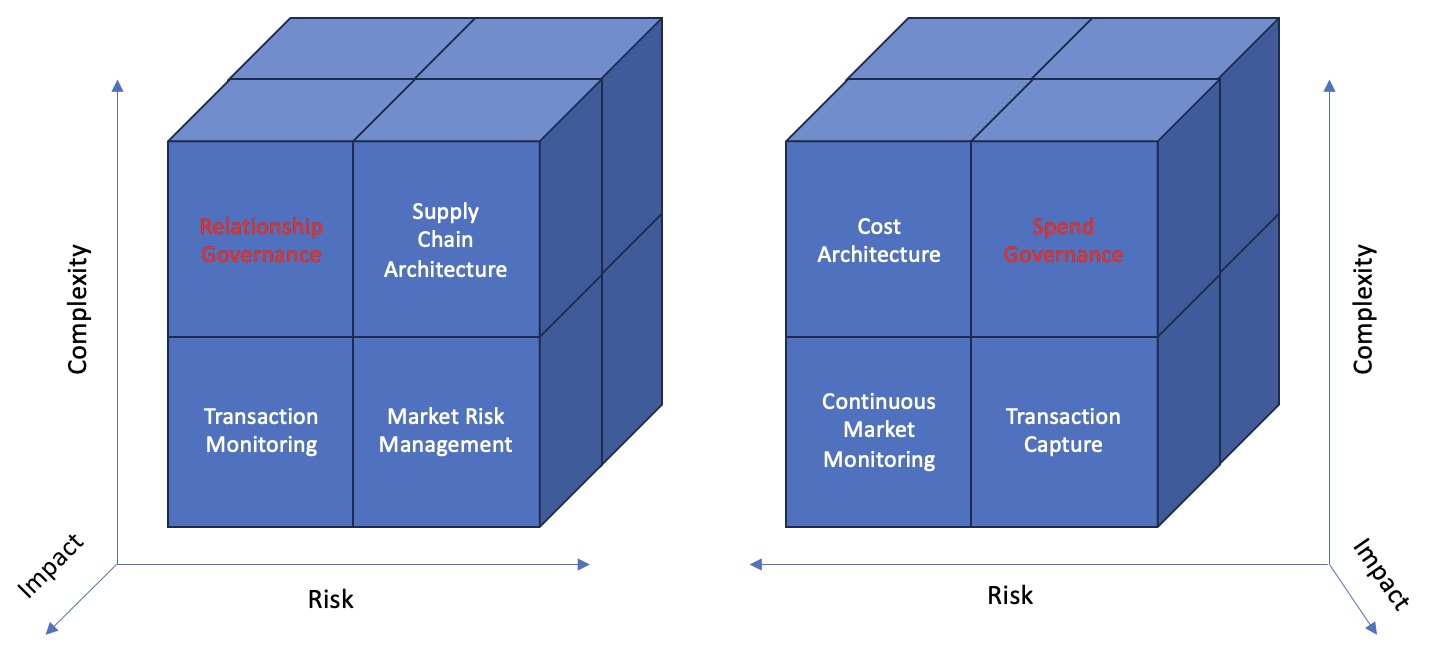
This concludes our initial presentation and discussion of the pocket cube of exact purchasing, and I’m sure Jason will soon have a V2 model to present to you.