Category Archives: Best Practices

Do You Have Your 2016 Supply Risk Management Game Plan?

Here at SI, the doctor certainly hopes so because you are going to get hit with at least one disruption this year, and chances are it is going to be fairly significant. (I.E. one that will result in, at least, a 3-month stock-out if not promptly mitigated, and not a 3-day stock out that, unless you are Apple launching an iPhone, won’t affect sales noticeably.)

As regular readers know, risk is still increasing, and the odds of your organization not getting hit with at least one significant disruption over the next 12 months is, at best, 1 in 10. You have better odds of winning a prize in a Lotto 6/49 draw (in Ontario, Canada where you win a Free Ticket and effectively get your investment matched on the next draw when your ticket matches 2 of 6 numbers) than of not experiencing a significant supply chain disruption over the next twelve months. Ouch!

But you’re overworked, underpaid, and not trained in risk management and probably don’t have a game plan yet. So what can you do?

Well, you can start by checking out the doctor‘s and the maverick‘s recent four part series on “Your Supply Risk Management 2016 Game Plan” over on Spend Matters Plus (membership required) which dives deep into how you can best define manage your supply risk programs. This series:

  • defines the types of supply disruption, product cost volatility, regulatory compliance, and reputation risk you need to plan for
  • explains why you have to think global and implement local to develop an effective strategy
  • gives you strategies to identify primary risks, mitigations, indicators, and monitors
  • helps you understand how you can align risk and reward to get support
  • helps you understand how to get more C-level visibility
  • and presents a scoring methodology that demonstrates business impact, which is critical to getting C-Level support

All four parts were up as of last month, and all four are a must read for anyone who needs to get a grip on supply risk and how to handle it. Don’t wait until it bites you in your backside three days after a critical order was supposed to arrive (but didn’t because the tier 1 supplier decided not to tell you when the tier 2 supplier didn’t supply the raw material needed for production, which is no longer available because a mine collapse reduced the available, limited, global supply by 10%). The bite a supply disruption can take out of your business is much worse than a boghog will take out of your backside. So SI strongly recommends you check out the following now:

  • Part   I: Supply Risk Definitions
  • Part  II: Developing Strategy
  • Part III: Risk and Reward
  • Part  IV: Measurement and Management

Marketing Mayhem Got You Down? Maybe It’s Time to Master the Marketing Way.

In many organizations, Marketing is still one of those sacred cow categories that Procurement has (very) little influence over but yet often accounts for (up to) 20% of spend. It’s also one of those categories that, like packaging, logistics, and MRO, straddles the boundary between direct and indirect (which are, as you know, two categorizations that SI despises because it’s strategy and complexity that matters). And, even though it (should) have a substantial impact on sales and revenue, the reality is that it has a much greater effect on the bottom line as an average marketing organization is overspending in the double digit percentages on a significant percentage of its spend — especially when the spend is on consumables (like print) or commodity services (like website design, social media marketing, or production overhead costs).

But mastering the marketing way is not easy — marketers, like financiers, have their own language, their own modus operandi, and their own tastes and in each aspect are often quite different than Procurement, who they tend to distrust because they tend to firmly believe you have to spend (lots of) money to make money, so Procurement’s agenda of reducing spend runs counter to everything they believe in. And, conversely, Marketing’s traditional focus of spending their entire budget to raise brand profile and sales (even if not absolutely necessary) runs counter to everything Procurement believes in.

But this is just the tip of the marketing mayhem that Procurement has to get a grip on if it wants to help the organization get a grip on marketing spend. In order to even get through the door and get a foot in the marketing department, Procurement not only has to appear non-threatening and not focussed entirely on spend reduction, but has to talk the talk (and master the marketing lingo), walk the walk (and dress for marketing success), and live the life (to the point that they are comfortable with the marketing way).

But this just get’s Procurement in the room. In order to get Marketing to listen, the “savings” message has to be buried, and the focus has to be on what marketing cares about — helping them get the best creative talent and ensuring they have as much money as possible to do this. (In other words, it’s about helping Marketing achieve “cost control” on non-value added products, like print, and services, like commodity social media campaign management, web design, or production house services.) The best value marketing can bring is a campaign that increases brand value (perception), and this takes the best talent, who want the top dollar. Procurement has to be able to convince Marketing that they can help Marketing do this by better cost control and better processes.

Then, once Procurement get’s the core messaging right, they have to bring the right process messaging. Some Marketing departments are still in fax, email, and spreadsheet hell when it comes to tenders, bids, and negotiations. They don’t have good supporting platforms, processes, or tender management support. This is the value — and power — that Procurement can bring. But the messaging has to go beyond the canned e-Negotiation messaging that Procurement was sold on. Marketing projects are not typical products or services and Procurement has to understand this to get Marekting’s support.

Procurement has to understand Agency (Lifecycle) Management, the importance of scope of work, the nature of agency search consultants, market intelligence (for marketing), and campaign management, among other critical marketing terms and techniques. When you put it all together, the education and understanding needed to even approach the sacred cow marketing spend is quite considerable indeed, and the education available to you quite limited. Until now.

Over on Spend Matters Plus, the first three parts of a new six-part series on How to Get Marketing Spend Under Management by the sourcing doctor and the spend anarchist are up for your educational pleasure. This in-depth series, which will take you through mastering the marketing way, understanding the value drivers, engaging executive support, bringing a message of structure and support in agency management, going deep on tender support, and agency intelligence, is just what you need to understand marketing and finally get marketing spend under control in 2016.

We hope that this ground-breaking first-of-its-kind series is just what you need to take your organization’s spend management to the next level. For those of you wanting to dive in, here are links to the first three posts:

  • Master the Marketing Way
  • Understand the Value Drivers
  • Engage Executive Support

Enjoy!

The Marketing Spend RFP – Everyone is debating over the death of it — I think it needs to be improved Part II


Today’s guest post is from Mat Langley, a Strategic Advisor and Procurement Executive with 14 years experience in leadership roles in strategic sourcing and category management in Europe, Africa and Asia across Finance, IT Outsourcing and Oil & Gas industries who is currently associated with Shortlist.co.

In this post I am suggesting three areas the tools we’re implementing need to change to give Marketing what they need and then I’d love to hear any more ideas/suggestions that you have.

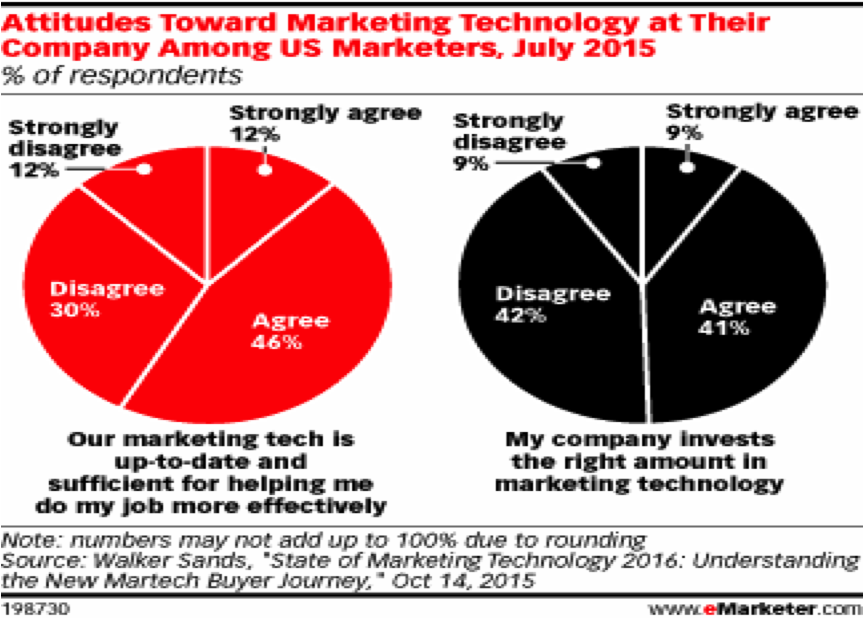
The ideas below are based upon the fact that a significant percentage of marketers (greater than 50% according to a July study by Walker Sands2) believe that we’re not investing enough in the right amount or the right type of solutions for them.


eMarketer.com Marketing Attitudes
1. The tools we’re providing need to improve usability – day 1

A recent international survey of Procurement Executives by Ivalua shows that we are focused on transforming the toolsets we’re using today — 80% of us consider Digital Transformation an opportunity3. That’s fantastic – now our focus needs to continue finding tools that are simple for marketers to use — on day 1 — not year 1. Preferably they should have modern interfaces and be SaaS so Marketers don’t have to use one brain at home and another at work.

2. The tools we’re providing need to improve access to qualified agencies

With the significant increase in channels and the number of content components that need to be created – access to a broader set of qualified specialist agencies to meet campaign needs is required. We need to provide tools that let marketers find, engage and then partner with agencies big and small across the specialist spectrum regardless of whether they are across the street or across the globe. And no, I’m not recommending that long-term relationships or that strategic and broad partnerships aren’t important — I’m simply pointing out that Marketing needs an agile toolset to deliver against compelling (and evolving) challenges — and they need access to partners ‘on demand’. This needs to be done in a way that meets our obligations to protect the organization commercially while bringing in the best and brightest vendors.

3. The tools we’re providing need to improve the creation of Request for Partnerships (RFPs) – perhaps they could even be user friendly?

Everyone in the organization has too much work… We need to provide tools that allow Marketers to find and share best practice workflows, templates for briefs, easy access to current best practice questions and that have the maximum amount of automation built-in for comparisons, approval workflows, agreement signatures, and so on. And our tools need to integrate with other tools marketers are using to get the job done – whether that’s Dropbox for file storage, Slack for communication, Office365 for email and yes, even your ERP system! And most of all the tools we choose need to help engage agencies and build long-term partnerships – not drive them all into a single box as described by Kirk Cheyfitz in his piece on ‘6 New Reasons to Kill the RFP4:

I think the fact that you put your RFP out only to agencies you really like is a demonstration that it wasn’t too closely allied to the mass, mindless cattle calls that I rail against. Then you actually seem to ask open-ended questions that invite the respondents to define or re-define the conversation. And that puts you completely outside classic RFP territory. Even I would respond to an RFP like that.

I believe that with a renewed or for many an on-going focus on the above 3 items we can align with Marketing and let them take control of their Request for Partnerships which will, hopefully with the right tools, lead to RFPs being done in days and weeks – not months and with less frustration and pain for all stakeholders involved: Marketing, Procurement and Agencies. This should lead to more of the Marketing spend being influenceable and competitive, thereby addressing both obligations of procurement to the marketing team and the broader organization.

Thanks, Mat.

2 Walker Sands State of Marketing Technology 2016 Understanding The New Martech Buyer Journey
3 Ivalua. (2015, 3 November). “International Survey Procurement Executives”, PROCUREMENT IN THE DIGITAL AGE: Measuring the impact of Digital on Procurement Departments.
4 Kirk Cheyfitz. (2015, April 02). 6 New Reasons to Kill the RFP: Find Innovators, Not Commodities.

The Marketing Spend RFP – Everyone is debating over the death of it — I think it needs to be improved Part I


Today’s guest post is from Mat Langley, a Strategic Advisor and Procurement Executive with 14 years experience in leadership roles in strategic sourcing and category management in Europe, Africa and Asia across Finance, IT Outsourcing and Oil & Gas industries who is currently associated with Shortlist.co.

I want to start with a bold statement — in Procurement, the most challenging group to work with is most often Marketing. Almost every other function in the organization easily identifies the value we aim to deliver. When it comes to who’s really leading, the RFP there shouldn’t be a ‘hot potato scenario’ — we guide, as Procurement experts, and collaborate in a mutual partnership. Marketing, by comparison is still evolving their views on how to collaborate with Procurement. In a late 2014 study conducted by the ANA (Association of National Advertisers), nearly half of all Marketing and Procurement respondents stated that the relationship between them needed to be more collaborative. Nearly 50% of Marketing and Procurement professionals admit that they aren’t collaborating the way they need to in order to deliver maximum value to their brands.

Now, on the flip side, my experience with Marketing colleagues is that they are passionate, energetic and constantly focused on being creative. For Procurement (or Marketing) people reading — I’m guessing you’ve had more than a few debates and I’m sure that debate often centers on how Marketing feels like they’re wearing an RFP straightjacket designed, fitting and sewn by Procurement!

With agencies currently rebelling against RFP’s and even some very high profile CMOs like Linda Boff from GE calling for the ‘death of RFPs’1 — organizations can quickly get themselves in a downward spiral, ‘hot potato scenario’. It’s a relatively simple problem at its root: when Marketers don’t fully collaborate and provide the necessary support at the beginning of the RFP process, someone has to jump in and grab the ball (find the agencies, write the brief and RFP questions, and run the process) — that often ends up being Procurement — which doesn’t always lead to the best results for anyone involved: Marketing, Procurement, Agencies … everyone.

Hot Potato Was Fun as Kids — Not Today

To be clear, no one is at fault here. Marketing hates RFPs because they feel they are old and outdated; in stepping in to assist Marketing with their agency selection, Procurement ends up writing more of the RFP than they should, often using out of date questions; then it gets sent to more Agencies (just in case) because Marketing doesn’t have a short list or have time to find a strong and competitive agency panel; and finally, Agencies are overloaded responding to bloated RFPs and remember above – they’re also hoping that RFPs die. In the end, we’ve all played our part in proving exactly why RFPs are so terrible and ‘out of date’ – and the easy answer is just to kill them — and the tremendous value they can provide to everyone involved.

Now is not the time to kill the RFP (nor is that what we are suggesting) — it’s time to enhance our focus on improving communication, collaboration and building great internal and external partnerships. The marketing industry is changing so rapidly, with new channels and divisions, new technology, broader yet flatter reach requiring even more agility and calls for more focus on driving value out of every dollar spent. It’s an exciting time but also daunting and we need to ask ourselves, if the CMO is struggling to keep pace with this change, how are we going to support and bring value?

Time for more focus on what’s working and less ‘tossing blame around’ — Time to give Marketing the tools they want

Ok, I know that there is no perfect world where Marketing loves Procurement, Agencies love Procurement and Procurement loves procurement workloads… But there are things we’re doing really successfully that we can build upon. In Part II, I’ll suggest three areas the tools we’re implementing need to change to give Marketing what they need.

Thanks, Mat.

1 Marketers: It’s Time to Say RIP to the Media RFP

Procurement Talent Management: How Do You Recruit, Train, and Retain Your Way to Procurement Success?

It’s a difficult question. Top Procurement talent is in short supply, budgets are tight, and between (brain-dead) budget cuts and time constraints, training is that magical activity that you only hear about in fairy and folk tales that begin with the words “Once Upon a Time”.

So just how do you find and bind top Procurement talent in today’s economic landscape? It’s a tough problem, but one that Charles Dominick, Founder of Next Level Purchasing, has addressed in his latest paper on Procurement Talent Management: Recruiting, Training & Retaining a Modern & Awesome Buying Team. (Because the world’s second [or is that third] oldest professions is awesome.)

In this paper, Charles notes that just like there’s more than one way to make a tamale*1, there’s more than one way to go about recruiting Procurement talent, namely, the traditional way and the radical way. Organizations that search for talent the traditional way look for people who

  • have experience in the industry,
  • have Procurement experience, and
  • have experience buying the same categories they will be expected to buy.

There are advantages to this approach in that these people are typically loyal to the industry and want to stay within it (as that is their comfort zone and they like their comfort zone), they can typically hit the ground running, and good matches are likely. However, there are disadvantages to. If you continually replace the Volkswagen Beetle with a newer model, you still just have a Volkswagen Beetle. You don’t have anything radically new, and, as such, are not likely to get the radically new ideas you need to get out of a rut.

But there is another way. Instead of looking for someone who’s good on the traditional paper, look for someone who:

  • has the personality that fits the corporate culture,
  • has influential charisma, and
  • has intellectual potential.

Such a person, as Charles notes, can bring support for increased involvement of Procurement in the enterprise (as they fit, and, more importantly, can schmooze their way into non-traditional, and maybe even scared-cow, categories) and have the bandwidth to learn more advanced skills (and use more advanced processes and platforms to get better results). Plus, as these individuals are out-of-the-box that your team is trapped in, they are likely to bring some new ideas with them. You could find your best and brightest talent this way, or, as Charles point out, you could flop as the hire might not like Procurement or, even worse, while seemingly bright with his high IQ, just can’t adapt to the Procurement way.

There’s no right way, and the doctor would like to suggest that the best approach is often a fusion of the two, where you look for someone who:

  • has a high EQ, as they have to fit in,
  • has an above average TQ, as they have to use modern tools,
  • has at an average+ IQ, as they have to be able to solve problems,
  • has an affinity for the corporate culture
    which doesn’t have to be perfect as their EQ will let them adapt,
  • has experience in a relevant industry
    which might not be the company’s industry; for example, if you need an IT buyer, why not hire someone who used to be an IT account manager, is comfortable with the technical terminology, and knows all the tricks and traps providers will throw at you (and how to avoid those expensive change orders), and
  • has some operational experience
    in Sales, Finance, Engineering or a related area that will allow them to pick up Procurement quickly.

This person, who might be used to a different box, is likely to come with some new ideas, adapt to the organizational culture, learn what they need to know, and have the potential to contribute. Now, there’s still a risk that if they come from Sales account management they won’t like the job, but considering the increased reward that will definitely come from expanding the search box (at a lower risk than the true radical approach), the doctor thinks it would be worth it.

As indicated, the paper also addresses the subjects of training and retention, which are important, but which we’re not going to cover. Even though the section on retention is quite good, as there’s nothing groundbreaking on this topic, we’d rather focus in on the discussion of the traditional vs. the radical approach, as a real understanding of this subject will help you tackle the biggest problem — finding talent in the first place. Training is easy — fight until the budget is re-instated and send your people on courses and/or bring experts in on a regular basis to help keep them current on best practices. (Given the ROI numbers, it should be a no-brainer.*2) And any company that truly wants to retain talent will do the little things that go a long way. But even the best employers don’t always know who to look for. That’s why Procurement Talent Management: Recruiting, Training & Retaining a Modern & Awesome Buying Team is a must-read for any CPO or VP who wants to build the best buying team she can.

*1 We don’t use the other phrase here on SI. (LOLCat does not approve.)
*2 But that’s the problem at many organizations these days, no brains in the higher ups. 😉