Real Research Requires Real Human Intelligence and Effort
(I’m not here to be nice. I’m here to educated and inform. Something most sites, including LinkedIn, are doing very little of lately!)
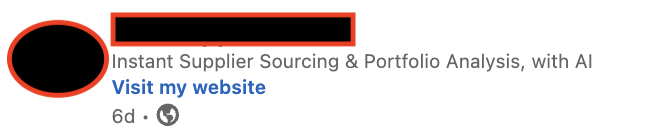
Joël Collin-Demers recently made the understatement of the year when he said 15 functionalities comparing ZIP to Jaggaer isn’t analysis/comparison, it’s pattern-matching by an LLM with no domain context. At best it’s unhelpful. At worst it points procurement leaders toward the wrong tools entirely in response to, with no due respect, a complete crock of AI sh!t published by TEEM.Finance (and reported by a TEEM member who claims instant supplier sourcing & portfolio analysis, with AI# in the tagline, which is another crock of AI sh!t that I must also address).
First of all, at best someone selects an inferior product, wastes a lot of time and money, and ends up in a situation where they are still limping along trying to get basic tasks done with yet another platform that doesn’t come close to delivering on its promise while doing nothing to deliver an increased return on the large amount of money spent on SaaS supposed to solve the organization’s Procurement pain.
At worst, it points the buyer to a product that costs five times as much, doesn’t even accomplish core use cases (if the product works at all outside the demo lab), and results in an absolute disaster upon implementation (with next to zero adoption and more bypass than the organization has ever seen due to the lack of core capability) that results in the organization having to issue another RFP and go through the whole process again with a jaded and angry employee base who expects nothing good will come of it.
The danger of a poor Procurement product pick cannot be understated or underestimated. Nothing will cripple an overworked and under-resourced Procurement department faster than a bad platform (and doubly so if it contains [Autonomous] Gen-AI)!
So, with so many bad product comparisons and maps out there (including Gartner’s and Forrester’s), which I have tackled repeatedly on Sourcing Innovation, why the need to target this one? Because while Gartner and Forrester can be relied on to give you the generally best bet from among their customers which have been confirmed to have relatively equal core functionality,
- a random comparison between two different players based on a mere 15 data points that are randomly selected and called “use cases” only guarantees they both exist in the Source-to-Pay space,
- any use of AI is flawed from the get-go,
- and any comparison that scores Zip 94% and Jaggaer 100% is obviously a complete and utter crock of AI generated sh!t
Let’s revisit Joel’s comment where he calls out Solution Map (which Hackett will hopefully keep).
- Over 500 clearly defined functions are scored on a scale of technical progression (from 0 to 5). Not 50. And definitely not 15!
- A 100% based on TODAY’S known Best-In-Class functionality would require a Solution Map score of 4.0. Most suites averaged in the 2.5 to 3 range (average to slightly above). Jaggaer is no exception (and Zip is still far from a suite, it’s I2O slowly adding baseline procurement capabilities, not S2P). (Remember, I DESIGNED the core Sourcing, Supplier Management, Analytics, and Contract Management [this one joint with Pierre Mitchell] maps and DESIGNED the common core across all the maps for Solution Map 2.0. And I scored them for 7 years.)
- They DO NOT cover everything … there’s always innovation, and always edge cases we ignored (as the goal was to produce a useful map for the majority).
- They were TECH and CUSTOMER SATISFACTION only. And you need to assess more than that to select a vendor (as per our Successful Vendor Selection series). (And, sometimes, you have to figure out what you should even be looking at, which is why I penned a 39 part series to walk you though the thought process (and Joel, stop complaining about having to write an 8,500 word series on P2P functional requirements … you’re just getting started).
- And they compared apples-to-apples. This report compares apple-to-oranges, as it’s conclusions are “choose JAGGAER ONE if your organization manages direct materials, manufactures products, or operates in a heavily regulated sector” or “choose ZipHQ if your procurement team needs to configure complex approval workflows across IT, Legal, and Finance without technical resources“, which effectively boils down to “choose Jaggaer if you need Source-to-Pay, and “choose Zip if you need Intake to Orchestration” which is a recommendation that DOES NOT require you to read a report to figure out. All you need to know is
- Jaggaer is Source to Pay.
- Zip is Intake to Orchestration
and the answer becomes pretty f*ck!ng obvious!
In order to be useful, at a bare minimum, this is what a comparison needs to do. Define the product domain being compared. Identify the extent of core, should have, and nice-to-have functions required by a product to support the product domain (based on standard functionality and domain use cases). Create a maturity definition for each function. And then use HUMAN INTELLIGENCE to score each product selected for inclusion (on actual demos from the vendor or willing partners and/or current customers). Not bullsh!t Gen-AI that can be fooled by bullcr@p marketing!
Anything less is not a meaningful product comparison. It’s simply an exploration against a few points of interest.
Now, if that’s human led, that can be useful as supplementary material in a decision. After all, the Solution Map will merely grade functionality like flexible workflow configuration on a standard scale but won’t track specifics of how it’s done, how user friendly vs. partner friendly vs. vendor friendly the configuration is, actual customer use cases where the workflows had to intersect 3 or more departments and average customer sentiment on that feature, or provide any other color that might help you make a decision when two solutions look acceptable from a technical and customer satisfaction perspective.
So, if TEEM.finance or someone else wanted to hand pick the most common / relevant use cases, dive in, do a human review, and present their analysis as key points to consider — that would be awesome, and a great excuse to keep writing (so long as said writing is NOT turned over to [Gen-]AI)!
After all, I’m not going to do it (because, frankly, I’m not interested in seeing the same old functionality over and over [as I already saw, and wrote, about it all multiple times — and you should be able to access that if you have a Hackett Membership] as most of the suites have done little to upgrade anything in the last few years as they have switched private equity ownership and bled key talent), and neither are most analysts (who have to cover more vendors than most can handle — remember, there are over 700 vendors in our space, and if you don’t believe me, I again refer you to the mega-map of 666 vendors SI compiled for you).
But it has to be a real review, based on a real demo and/or real discussions with customers, and not AI in any way, shape or form. Otherwise, at best, it’s sl0p. At worst, it’s the written word equivalent of toxic waste. And let’s NOT forget that and continue to fight against the use of AI where AI should NOT be used!
Now, as to the other crock of sh!t, namely instant supplier sourcing & portfolio analysis, with AI. There’s no instant. Yes, there are some great tools out there that can identify a list of potentially relevant suppliers in seconds, compared to the weeks of manual searching you might have had to do in the past, and there are tools out there that can automate sourcing ONCE you have identified your precise item needs, your price tolerances, and your pre-vetted supply base … but, guess what, AI CAN NOT DO all the stuff in between, especially if the product (or category) is high-risk, high-complexity, or high-impact (under the Busch-Lamoureux Exact Purchasing Framework).*
You have to vet the supplier. You have to make sure it’s still operating, the license certificates, registrations, and insurance are both real and current, that the products are still offered, that they are real (by getting a sample), that they will suit your needs, and that the supplier is capable of producing the quantity you need in the time-frame you need it in. You then have to qualify the risks and impact, sign off on them, and enter the supplier (and approvals) in the system. Then you have to define the sourcing project, your tolerance, and your conditions for bid acceptance. YOU! Not BS AI!
In other words, there’s nothing instant about it … and for a highly complex product, or category, that could be days or weeks of manual human work even after all the tactical drudgery is automated for you. So, while a tagline that said faster supplier sourcing and portfolio analysis, with AI, would be 100% true, a tagline that says instant is inherently false. (Unless, of course, your risk tolerance is sky high and you don’t care if the worst case scenario hits and destroys your business … so if you’re looking to be the next Eddie Lampert and dismantle a 100+ Billion company [in today’s dollars] in record time, go for it!)
# name and image hidden as I’m not entirely sure it’s not a bot auto-publishing AI slop
* to be totally honest, you can’t even expect AI to be reliable for low-risk, low-complexity, and low-impact products/categories either, but since the impact of the mistakes it’s going to make will probably require less manual effort to clean up than dealing with all of those products manually, you can potentially live with it