xkcd has it right.
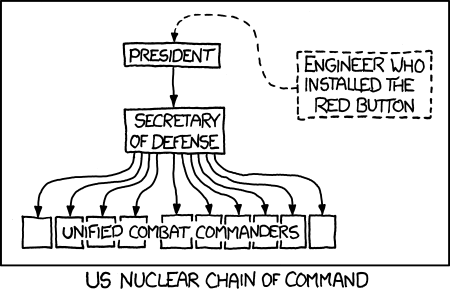

xkcd has it right.
One of the themes that came up a few times at the Hackett Best Practices Exchange was that of category management and moving beyond the first generation category sourcing plans that defined “strategic sourcing” for most of the last decade. Just like the savings from repeated reverse auctions on the same category quickly trend to 0, the savings from a first generation sourcing strategy also trend to 0 over time unless the strategy is continually kicked up a notch over time.
Of all the presentations I attended, I think Disney best nailed where an average organization needs to be with its category sourcing vs. where it is today, a transition that takes the organization from category sourcing to true strategic category management.
| Category Sourcing | Category Management | The Difference |
| Project-Based | Value-Focussed | The focus is on understanding the total cost associated with the category and the value it delivers. |
| Sourcing Waves | Supply Chain Landscape | Each category is managed holistically, and not as part of a wave, and reexamined anytime significant market changes that could impact the category occur. |
| Single Lead | Cross-Functional Leadership Team | In line with the holistic view of the category. |
| Compliance | Strategy | Compliance with sourcing plan and regulations is not enough. A strategy that goes beyond complying with current requirements to expected requirements to innovation is required. |
| Show Me the Money | Let Me Help You Find the Value | It goes beyond simple saving reports to actually engaging the business leaders and C-suite as part of overall strategy formulation. |
| Contact Engagement | Engagement Plan | There is a plan to engage the right stakeholders at the right time, not just as needed to put out fires. |
| Historical Spend Analysis | Future Spend Forecasts | Understanding past spend is a great start, but the best results come from optimizing against future demand. |
| Supplier Concessions | Supplier Expertise | Next generation supply management focusses on working with suppliers on cost reduction and innovation, not browbeating them with a hammer until they reduce their margins until their own viability is at risk. |
In Part I.i we reviewed the introduction to Bob & Doug’s (& Michael & Shelley’s) classic Straight to the Bottom Line: An Executive’s Roadmap to World Class Supply Management in anticipation of Bob and Bob’s new text on Next Level Supply Management Excellence: Your Straight to the Bottom Line Roadmap which is coming out next month on June 28. Then, in Part I.ii, we reviewed the seven-step process that an organization could follow to get from where it is to where it needs to be. This was followed with a review of some case studies and insights from best in class in Part II. Our last post, Part III.i, covered four of the best practice ABCs that will help an organization get to best-in-class more efficiently while increasing the effectiveness of your Supply Management organization. Today’s post reviews the remaining six ABCs.
Negotiations Management
Nothing captures the inherent complexity of negotiations management better than this quote straight from the bottom line:
Everyone in the organization has bought things for their personal lives. Whether it’s the CEO, his executive assistant, or the blue-collar guy on the loading dock, everyone buys things every week in their personal lives. And, in fact, most people are very proud of their buying skills. Why not? After all, ever since someone spent his or her first dollar as a young person, that person has done a lot of buying, and they probably believe they do a good job at it. That’s our biggest challenge — everyone sees themselves as a buyer. |
This is why it’s challenging, why a buyer needs a strategy, why a buyer has to define a MDO (Most Desired Outcome), a LAA (Least Acceptable Agreement), and a BATNA (Best Alternative To Negotiated Agreement) before starting a negotiation and be prepared to stick to her guns. And she needs to be aware of all of the basic factors that can affect a negotiation — summarized and discussed in the text.
Contract Management
Contract Management goes beyond using a contract management tool to create templates, capture contracts, and track expiration dates to supplier-centric strategies. An organization that does so will not only reduce (contract) creation time, reduce maverick buying, and properly prepare for sourcing efforts, but also optimize the total relationship with its key suppliers through a holistic review of the relationship.
Risk Management
Risk Management is the process of analyzing the possible exposure to loss and reducing loss potential. Proper risk management recognizes that some loss potentials may be avoided, others can be modified to limit their financial consequences, and not all risks must be accepted as they first present themselves. The risks that will be addressed are those with a loss potential that is unpalatable to the organization. The type of mitigation will be dependent on the risk in question, and may take the form of change in sourcing strategy, interest rate hedging, commodity hedging, credit insurance, and/or asset insurance, depending on the risk in question. For detailed examples of market, social, property, casualty, employee, and financial risks and mitigtions, which can be quite complex, see the text.
Consortium Buying / Group Purchasing Organizations
Consortium buying, the process of pooling your needs with those of other companies, is a great idea in theory but, in practice, it generally hasn’t worked. First of all, direct competitors are not good candidates for a consortium due to a natural reluctance to share basic information and best practices with each other. Secondly, most of the initial companies will be at different stages of procurement sophistication and it will be difficult to get all of the companies on the same page. Third, the quality of data available from each company regarding total spend will be vastly different. As a result, most consortia failed. There are some examples to the contrary, including Corporate United, but unless the participants are:
the chances of a consortium working are not very good.
Asset Recovery
Used equipment dealers seemed to prefer (and be able to afford) new Cadillacs in their line of business. Why? Because, traditionally, when a plant facility had an idle piece of equipment somewhere in the plant, someone in the plant would declare the equipment as “surplus”, it would be subsequently written off for accounting purposes, then stored somewhere and forgotten until it got in someone’s way who would then seek out a scrap dealer who would get the equipment simply by offering an amount close to the scrap or write-off value. In reality, the asset would be worth considerably more, and if the scrap dealer could find another buyer, the scrap dealer would net a very high return.
However, an organization with an effective asset recovery program in place will match unused equipement with needs in other parts of the business and strategically dispose of unneeded assets in profitable used equipment sales.
Business Process Outsourcing (BPO)
Often defined as “the delegation of one or more IT-intensive business processes to an external provider that in turn owns, administers, and manages the selected process based on defined and measurable performance criteria”, the BPO market exceeded 100 Billion in 2004 and may exceed 1 Trillion today. The Procurement BPO market is (significantly) smaller, but if the organization is not up to snuff in certain categories, it might be the better option. The advantages of BPO include rapid cost reduction, the ability to focus scarce resources on strategic catgories, and the ability to upgrade systems and people across the enterprise. The main disadvantage is higher costs and reduced efficiency if done wrong. For an overview of the organizational state required for BPO success, see the text.
Finally, the authors also provide a detailed discussion of when to use a consultant (intelligently).
For more details on the effective use of outsourcing, negotiations management, contract management, risk management, consortium buying, and asset recovery, (re)read Bob & Doug’s (& Michael & Shelley’s) classic Straight to the Bottom Line. It’s packed with insights on every single page. And even though, at five posts, this is SI’s longest book review, it’s only scratched the surface at summarizing the deep and varied insights that can be found in this classic text. When Bob & Doug put pen to paper, not only do they match the insights of Canada’s own Bob and Doug, but the content is so rich that a proper review would be longer than the book itself. So give it a(nother) read. You won’t be disappointed.
Today’s guest post is from Nicolas Hummer, Director of Client Relations for The MPower Group, who told us last year that Strategic Sourcing is Dead.
It’s spring time, and that means the (good) doctor is out on tour shaking hands, kissing babies and keeping his finger on the pulse of our dynamic community. Recently he was at The Hackett Group’s Best Practices Conference. As the doctor continues his summer tour, it’s only fitting that the next stop on his junket is the Next Practices Xchange, facilitated by The Mpower Group in Oak Brook, IL on June 9th.
The Next Practices Xchange is a member driven group focused on the advancement of ‘Next Practices‘. Membership is limited to Director level and above sourcing and supply chain executives and members choose the themes, dates and location for these events. These full day events are designed to facilitate intimate networking opportunities and truly strategic thinking away from the demands of daily executive life. The Next Practices Xchange is unique in that members participate in a number of facilitated workshops that augment keynote presentations. These workshops are designed to facilitate knowledge exchange between participants and provide take-aways and Next Practices that are applicable in an executive’s every-day life.
The upcoming meeting’s theme, From Cost To Value, was inspired by the immense interest that was generated on this topic on SourcingInnovation.com last summer (see Yup, It’s still dead, for example.). Since then we’ve observed the entire dialogue in our community as it has shifted to a fuller value-based conceptualization of Supply Chain Management in which TCO and Cost are only smaller components of a bigger picture. This event is designed to start taking those concepts away from the blogsphere and into the boardrooms, warehouses and supplier/client contracts of attendees’ organizations. Attendees this year are a mix of Sourcing and Supply Chain executives from top companies including BP, CNA Insurance, Diversey (an S.C. Johnson Company), Kraft, FMC Technologies, SunTrust Bank, Sears, Ventura Foods, and many others.
If you are a Director-level or above executive in a Sourcing or Supply Chain related function and would like more information on this advent please feel free to reach out to me at nicoh <at> thempowergroup <dot> com.
Thanks, Nick.
In Part I.i we reviewed the introduction to Bob & Doug’s (& Michael & Shelley’s) classic Straight to the Bottom Line: An Executive’s Roadmap to World Class Supply Management in anticipation of Bob and Bob’s new text on Next Level Supply Management Excellence: Your Straight to the Bottom Line Roadmap which is coming out next month on June 28. Then in Part I.ii we reviewed the seven-step process that an organization could follow to get from where it is to where it needs to be. This was followed with a review of some case studies and insights from best in class in Part II. In the next two posts that comprise the third and final part of our book review, we will cover the best practice ABCs that will help you get to best-in-class more efficiently while increasing the effectiveness of your Supply Management organization.
In this third part, the authors cover ten techniques that an organization can use to take its Supply Management up a notch. In a nutshell, these techniques, which will be covered in today’s and tomorrow’s post, are:
Strategic Sourcing
Strategic Sourcing is the cornerstone of World Class Supply Management and without the foundatons it provides, an organization will not get to the next level. The fact based, rigourous process that involves substantial internal data gathering and evaluation, and extensive external data gathering and interactions, in order to select the most appropriate strategy and negotiations approach and ultimately select the right supplier(s), it transforms conventional purchasing into a strategic process involving all appropriate stakeholders in a company and add[s] significant value by reducing total costs relating to purchased goods and services. Depending on whom you consult, it is usually a five to nine step process, with seven steps being the most common. The classic A.T. Kearney model has the seven steps of sourcing group definition, sourcing strategy, supplier portfolio, implementation path, negotiations management, operational integration, and continuous market benchmarking where the right strategy depends on business impact and supply market complexity.
Sourcing events will be tackled in waves where easy, high opportunity categories will be tackled first, followed by moderatly complex, high opportunity categories and then, finally, by difficult high opportunity categories. Only once the high opportunity categories have been sourced will catgories with lesser opportunities be considered, and only if it’s not time to circle back to new, easy, high opportunity categories.
Supplier Relationship Management
Companies at either end of the supply chain can sharply differentiate themselves if they apply a differentiated structural approach to their relationships with each other. Given that new product development time in 2005 was 12% less than 2000, that revenues from new products was 70% higher in 2005 than it was in 1998, and that product development time was trending downward while new product revenue was trending upwards, competitive pressure is increasing and the chances of success in key categories without collaboration are getting smaller by the day.
Strategic relationships with strategic suppliers are becoming more important by the day. However, the right relationship is needed with each supplier, and the right relationship depends on the category, the readiness of each party for a true partnership, and the complexity of the market. Depending on these factors, and the supplier’s view of the buyer, the right relationship might be transactional, basic, strategic, or equity. However, regardless of the relationship, management is important and management should be done to metrics that measure what’s important.
Supplier Diversity & Supplier Recognition Programs
Diversity, which fits into corporate social responsibility (CSR) programs, is an imperative for many companies, and those that do business in the public sector in particular as some government programs are only for those organizations that award a certain amount of their business to minority suppliers. Furthermore, with minority-owned businesses expected to be 37% of the market by 2020, getting a jump start is a good idea.
Supplier recognition programs recognize and reward an organization’s best suppliers. They are important because:
Low Cost Country Sourcing (LCCS)
Low Cost Country Sourcing (LCCS) was the name of the game in the early naughts, with the trend in some industries (like electronics) to source from low cost locales being dramatic. Some companies source over 70% of their supply from India and China. This is not surprising considering that, when done right, LCCS can take 15% to 25% off of a category’s costs, and there are documented savings of 29% at some companies.
However, LCCS is not a one-size fits all approach and a fair amount of complexity has to be resolved before a decision can be made. LCCS involves the following, often unique, complications that must be addressed
|
|
For more details on the effective use of strategic sourcing, proper supplier relationship management (SRM), effective use of supplier diversity and supplier recognition programs, and LCCS (re)read Bob & Doug’s (& Michael & Shelley’s) classic Straight to the Bottom Line. It’s packed with insights on every single page. In our next post, the final of this series, we will review, at a high level, the final set of best practices covered in Bob & Doug’s (& Michael & Shelley’s) classic text in anticipation of Bob and Bob’s new text on Next Level Supply Management Excellence: Your Straight to the Bottom Line Roadmap.